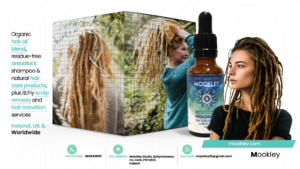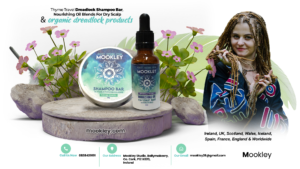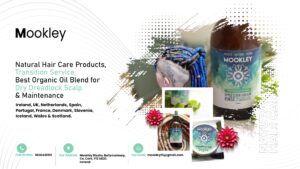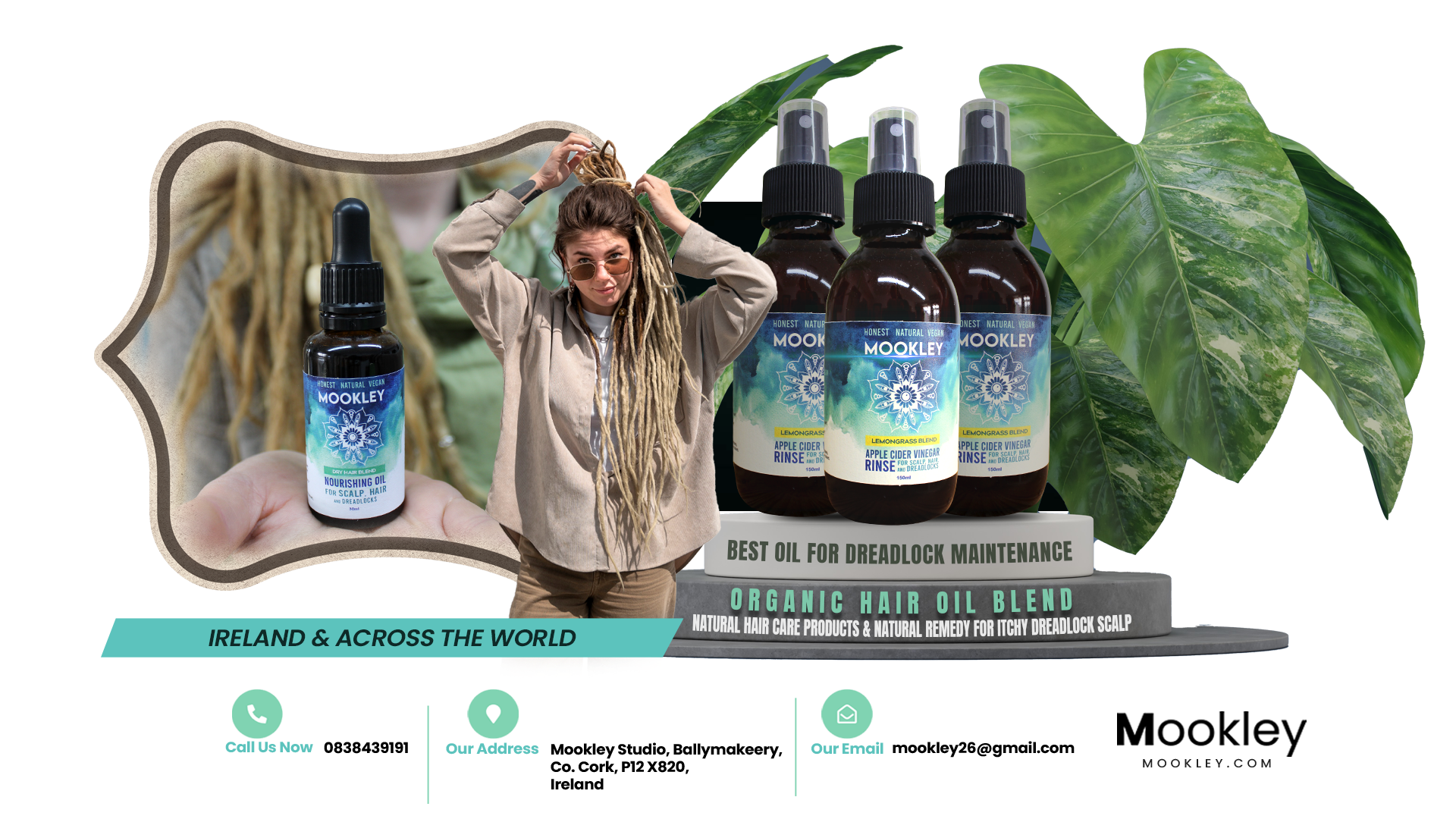
Selecting an appropriate oil may help you in maintaining dreadlocks with improved comfort and appearance.
When you want to know what the Best oil for dreadlock maintenance Ireland, UK, France, Wales, Portugal, and Denmark is, you should not consider only one miracle oil as there are many factors which play a role in selecting the right one like your skin type, hair type, loc type, etc .
Mookley knows that your healthy dreadlocks require more than just styling them. Our company has more than 14 years of practical experience in dreadlock design, repair and maintenance for different hair types and different levels of loc maturation. We believe in our technical knowledge about dreadlocks and respect of natural hair in Ireland. Mookley is located in Cork, Ireland.
🔌 Why Is Oil Important for Dreadlock Maintenance ?
Even though dreadlocks may be less high maintenance than other hairstyles, they should still be cared for properly. One way the scalp may get dry is through the cold weather or constant washing. In addition, it is possible for dreadlocks to get dry, especially if the natural oils do not reach the hair shaft.
An appropriate hair oil would help hydrate the scalp and give the dry hair a nice texture. However, it is not an excuse to skip cleansing. Over application of oil may cause dust and other products to build up within the dreadlocks.
Therefore, one needs to achieve a balance where the scalp is hydrated without using too many products.
🧾️ Jojoba Oil | A Lightweight Choice for the Scalp :
Jojoba oil is one of the most sought-after scalp and hair treatment oils due to similarities in the composition of this oil and natural oils produced by the scalp. It has a comparatively light texture, which makes it a good choice for those who do not like heavy or greasy treatments.
For dreadlocks, jojoba oil can prove to be especially helpful in case of dry scalp in between washing sessions.
🧷️ Why choose jojoba oil ?
🧷️ Lightweight and easy to spread.
🧷️ Good choice for scalp application.
🧷️ Helpful in fighting dry scalp sensation.
🧷️ Effective even in small quantities.
🧷️ Does not have a tendency to create a heavy coating like thick oils.
A few drops rubbed gently into the scalp can usually be sufficient. There is no need to saturate the locs.
🧾️ Coconut Oil | Rich Nourishment for Dry Hair :
Coconut oil is popular in hair care products in their natural form. Coconut oil is rich oil and may be useful in case when hair looks very dry and rough. There are those who like using coconut oil as a part of pre-shampooing routine, rather than putting a lot of it into the dreads.
Since locs tend to retain any product, it is crucial to stick to a smaller amount of coconut oil to enjoy the benefits it brings and not create any unnecessary build up.
Coconut oil can be an excellent choice when :
🧷️ Hair looks dry and brittle.
🧷️ Richer oil is preferred.
🧷️ You want to use oil before shampooing.
🧷️ Your hair works well with coconut oil.
🧷️ Keep in mind that each type of hair works in a different way with the oils.
🧾️ Argan Oil | For Softness and Shine :
There is also the choice of Argan oil that is used by individuals wanting to add some sheen to dry hair. It is comparatively lighter than the other dense natural oils and adds a smooth and glossy effect to the hair. If the matured dreadlocks have become dull-looking or feel slightly dry, a very little quantity of Argan oil can definitely make them appear better. The Argan oil is also useful for achieving an elegant finish to the locs without making them feel overly greased.
While applying the Argan oil, one should begin with a very little quantity. One should rub the oil in the palm before applying it to the hair in order to avoid the application of excessive quantities of the oil.
🧾️ Castor Oil | Best Used in Small Amounts :
Castor oil is much denser than jojoba and argan oils. Castor oil is commonly used in hair care formulations due to its dense consistency. When applying castor oil on dreadlocks, its pure form may be hard to apply and could be too dense if overused. It will be more practical to use castor oil when mixed with other oils.
A thinner carrier oil may help in making the castor oil more workable yet maintain its dense consistency. If you have thin hair or locs that get buildup easily, apply castor oil cautiously.
🧾️ Olive Oil | A Traditional Hair-Care Option :
The use of olive oil in haircare routines has been practiced traditionally. The oily nature of the product makes it suitable for individuals who need to use oil that is oilier compared to other types of oil especially when it comes to hair that feels extremely dry.
Nonetheless, it is necessary to take caution just as with the use of coconut and castor oil since using too much can cause locs to feel oily and sticky.
🔌 What Makes a Good Dreadlock Oil ?
Selecting an oil is more than simply opting for the most popular component. When maintaining dreads, it is important to take into account the ease of removal of a product as well as its reaction on the scalp.
Dreadlock oil needs to be :
🧷️ Light enough for easy application.
🧷️ Easily spread without soaking your dreads.
🧷️ Suitable for your scalp and hair type.
🧷️ Free of any extra buildup.
🧷️ Applied in the right amount.
🧷️ Compatible with your regular washing regimen.
If there is already quite a bit of buildup, using additional oil will probably not help.
🧾️ Oil Blends | Combining Ingredients for Balanced Care :
There is no need to select just one oil. A blend of lighter and richer oils can help produce an effective mixture. As an illustration, jojoba or argan oil can be used to achieve lightness, and a small portion of castor oil can be added to ensure richness. Sometimes botanicals may be added to a blend because of their pleasant aroma or beneficial effect on the scalp.
Organic Hair Oil Blend Ireland, UK, Netherlands, Spain, Portugal, France, Denmark, Slovenia, Iceland is an appropriate choice if you wish to get different ingredients in one blend. Nevertheless, natural ingredients do not always guarantee good compatibility with all individuals.
🔌 How Often Should You Oil Your Dreadlocks ?
No one-size-fits-all formula. It all depends on how often your scalp and hair require oil. For some, oil application may be required weekly, whereas others might find oil application sometimes enough. Moreover, even your schedule might vary according to the season. Winter and cold temperatures can make the scalp dry, whereas during summers or workouts, cleansing might become necessary for you. Instead of adhering to an exact schedule, listen to your scalp.
🧾️ Indications of whether your scalp requires a little bit of oil include :
🧷️ Dry and tight scalp.
🧷️ Dandruff due to dryness.
🧷️ Rough feeling hair.
🧷️ Locs which look unappealingly stiff.
Conversely, if your scalp is greasy, or if your locs seem like they are covered with something, then you are using too much of the product.
🔌 How to Apply Oil Without Causing Buildup :
The application method is equally crucial as the oil you use. Using oil directly on your dreads could lead to an uneven application process and excessive saturation.
However, you need to :
🧷️ Begin with clean and dry or slightly wet hair depending on your personal preference.
🧷️ Add a little oil to your palm or fingers.
🧷️ Apply it gently to the scalp.
🧷️ Ensure you focus on dry patches.
🧷️ Smooth out the rest of the oil on the locs.
🧷️ Do not saturate your hair.
🧷️ Wait until it absorbs fully before using other products.
🧷️ A little goes a long way when it comes to dreads.
🧾️ Oils and Itchy Dreadlock Scalps :
There are various reasons for itchy scalp such as dryness, residue build-up, sweat production, or even irritation or scalp conditions. The use of oil would work when it comes to dryness, but one must not use it to cover up other ongoing problems. In case the itching gets worse or it is coupled with some redness, sores, or scaling, one must visit a doctor or a dermatologist.
Moreover, one must consider one’s products. Sometimes the strong smell or particular essential oils can be a cause of irritation on the skin. Essential oils need to be diluted before being used on the scalp.
🧾️ Professional Maintenance Still Matters :
Oil is not the only aspect of dreadlock care. Cleaning, drying, proper maintenance, and professional maintenance can all help your dreadlocks look better and live longer. Professional maintenance will come in handy especially if you have problems with loose roots, thinning spots, damaged dreadlocks, and/or too much buildup. Attempting to fix such issues without using a proper method will only add more tension to your hair.
Mookley has over 14 years of practical experience working with all hair types and making, repairing, and maintaining dreadlocks. The studio is located in Cork and provides personal consultation for everyone at any stage of their dreadlocks experience. Also, if you want you can avail of their product worldwide.
Those who are looking for Natural hair care products Ireland, UK, France, England, Scotland, Wales, Slovenia, Denmark, Netherlands, Portugal will find products specifically designed for natural hair and dreadlocks easy to use .
🔌 Common Mistakes to Avoid When Oiling Dreadlocks :
A good oil can have adverse effects when overused. The most common errors that people commit in this regard include :
🧷️ Applying oil every day when it is not necessary.
🧷️ Saturating the whole dreadlock with oil.
🧷️ Failing to wash on a regular basis.
🧷️ Combining too many products.
🧷️ Applying pure essential oils on the scalp.
🧷️ Overusing heavy oils when you have a tendency to form build up.
🧷️ Believing that itchiness necessarily means lack of oil in the scalp.
The simpler, the better when it comes to oils application. Ensure that your scalp is always clean, and use sufficient amount of oil to keep the discomfort away.
🧿 Conclusion
Good dreadlocks will be made not by the use of too much product, but by consistency. Even the best oils can help your scalp feel good and make your locs softer and look more natural, but choosing the right one and using them in moderation is very important. No matter whether you prefer jojoba, coconut, argan, castor, olive oil or special blend, keep in mind how your scalp and locs react. Cleansing regularly and taking care of your locs professionally should always remain the core of your regimen.
If you are looking for a Natural remedy for itchy scalp dreadlock Ireland, UK, Spain, Denmark, Iceland, keep in mind that oil may help only with mild dryness, while chronic itching needs to be checked and not to be hidden by various products .
Having more than 14 years of experience with dreadlocks, Mookley knows that every head of locs is unique. Whether it is about creation, repair or advice about hair-care products, we do our best to help our clients. With the right habits and right products your locs will stay comfortable, healthy and well taken care of.