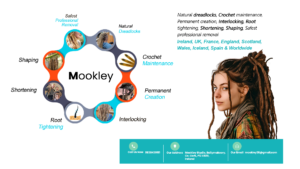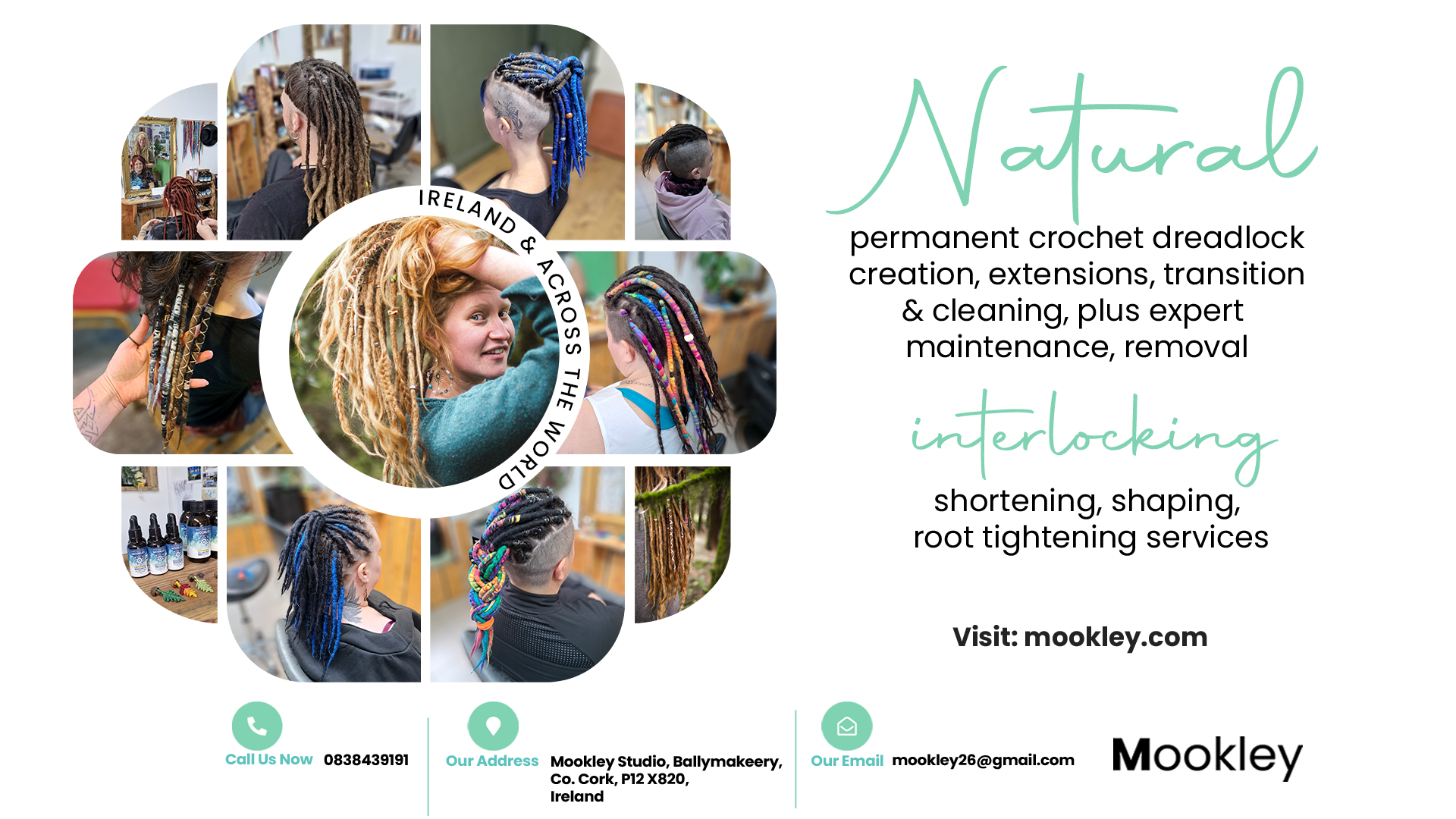
Whether you are taking your first step toward natural dreadlocks or need expert repair on mature locs, this guide covers every stage, including Natural, Permanent crochet dreadlock creation, extensions, transition, and cleaning services in Ireland and the UK, from creation, extensions, transition, and deep cleaning to maintenance, interlocking, root tightening, and shaping .
[PART 1] | Natural, Permanent Crochet Dreadlock Creation, Extensions, Transition & Cleaning :
(1.1) What Are Natural Dreadlocks and Why Does the Starting Method Matter ?
Natural dreadlocks are formed entirely from your own hair. There is no wax, no glue, no harsh chemicals at the root. They grow, mature, and strengthen over time into dense, beautiful locks. They express identity, honour cultural heritage, and, when started correctly, last a lifetime.
The foundation of every great set of dreadlocks is the creation method. A poorly started set leads to weak roots, uneven sections, and months of repair. A professionally started set gives you strong, uniform, mature-looking locs from day one.
(1.2) The Crochet Method | Ireland’s Safest Natural Approach to Dreadlock Creation {#crochet} :
When you search for natural crochet dreadlock creation, clients want one thing: a clean and professional start with no compromise to hair health. A fine crochet hook is used to interweave loose hair strands in on themselves. It builds a compact, knotted structure from the very first session.
Unlike backcombing (which leaves hair prone to unravelling) or wax methods (which coat hair in residue and prevent proper locking), crochet dreadlock creation produces :
✔️ Tight and uniform locks from session one; mature-looking immediately, with no “ugly duckling” phase.
✔️ Zero product residue; no wax, no build-up, no chemical interference with the locking process.
✔️ Precise sectioning; each dread formed within a clean, intentional parting
✔️ Versatility across all hair types; effective on European, African, Asian, and mixed-texture hair
✔️ Long-term structural integrity; crochet-formed locks age well, tightening and strengthening over time
A full-head creation session typically takes 4–8 hours depending on hair thickness, length, and desired lock count. Every new creation should begin with a thorough consultation covering thickness, section size, parting style, and overall look before a single section is formed.
(1.3) Permanent & Temporary Dreadlock Extensions {#extensions} :
Short or fine hair is no barrier to dreadlocks. Permanent dreadlock extensions use real human hair, hand-formed and seamlessly crochet-integrated with your existing hair. The result is indistinguishable from naturally grown locks. They add immediate length, density, and fullness with a bond that grows with your hair and does not slip.
For clients who want the look without the long-term commitment, custom wool dreadlock extensions are handcrafted to order in any length, thickness, colour, or style. Lightweight, expressive, and fully removable without any damage to natural hair. Wool extensions are an ideal way to explore the aesthetic before committing permanently. Whether permanent or temporary, every extension set should be individually matched to your existing hair.
(1.4) Dreadlock Transitioning | Evolving Your Style Without Losing Your Hair {#transition} :
Wanting to change your dreadlocks does not mean starting from zero. Professional transitioning protects your hair through every stage of change. Services include :
🔰 Adding extensions to existing locks :
Restoring length lost through breakage or shortening. It is matched seamlessly to your current texture and colour.
🔰 Expert shortening :
When dreadlocks have grown too long or too heavy, professional shortening includes full tip re-sealing and re-finishing to prevent the new end from unravelling.
🔰 Reshaping and re-sectioning :
Redefining drifted parts, splitting congoing (merged) sections, and restoring the symmetry of the original installation.
🔰 Safe, non-damaging removal :
Removing dreadlocks does not require shaving your head. With the right technique and patience, they can be fully combed out while preserving natural hair underneath. Each case requires individual assessment before work begins.
(1.5) Professional Dreadlock Cleaning | Deep Clean, Restored Vitality {#cleaning} :
If your locs feel heavy, smell musty, look dull, or resist home washing, a professional dreadlock deep clean is what they need. The dense, compact structure of a mature lock means product residue, hard water minerals, dead skin cells, and environmental pollutants can accumulate inside the loc over time. It is invisible from the outside but affects scalp health and structural integrity.
An effective deep clean protocol covers assessment. An organic apple cider vinegar pre-treatment soak dissolves mineral deposits and rebalances scalp pH. This is done through individual rinsing of each lock, complete drying, and a post-clean nourishing oil application to restore moisture and shine.
You can aim for a professional deep clean every 3–6 months. And more frequently if you swim regularly, use dry shampoo, or live in a hard-water area.
[PART 2] | Expert Dreadlock Maintenance, Interlocking, Root Tightening, Shortening & Shaping :
(2.1) Why Expert Dreadlock Maintenance Is Non-Negotiable :
Regular professional maintenance is the single most important factor in the long-term health of your locks. Done consistently, it keeps roots tight, sections defined, and dreadlocks free from weak spots and breakage. Skipped or done poorly, it leads to problems that grow progressively harder to correct.
(2.2) Root Tightening | The Foundation of Healthy Dreadlock Growth {#root-tightening} :
As hair grows, new hair emerges at the root. There are loose, unlocked, and not yet integrated into the existing lock. Without regular dreadlock root tightening, this new growth accumulates into a frizzy, spongy root section that weakens the lock’s base.
Root tightening pulls that new growth back into the lock using the crochet method. This method weaves loose fibres into the base of each lock until the root is compact, firm, and seamlessly integrated. It preserves hair health and creates a clean root, supporting proper lock maturity. It also suits all hair types, including fine, straight, and colour-treated. Most clients benefit from root tightening every 8–12 weeks.
One critical note: over-tightening too close to the scalp or too frequently can lead to traction alopecia. It happens due to follicle damage from repeated mechanical tension. A trained specialist always maintains an appropriate margin of flexibility at the scalp. Hair health must always come first.
(2.3) Interlocking | Structured, Long-Lasting Root Control {#interlocking} :
Interlocking (also called latch-hooking or root-flipping) threads the tip of the dreadlock through the root section in a four-point pattern. These are north, south, east, and west, creating a permanent knotted structure at each lock’s base. It is particularly suited to fine, straight, or low-porosity hair that can be difficult to lock with crochet alone. It is also preferable for clients who prefer longer gaps between maintenance visits.
The key distinction: the interlocking knot is permanent; once applied, it must grow out. Applied correctly, this is not a problem; applied with misjudged tension, the consequences are harder to correct. Method choice should always be based on your specific hair, not on speed or trend.
(2.4) Shortening, Shaping & Repair {#shortening} :
Dreadlocks that have grown too long, lost tip condition, or developed visual imbalance benefit from professional shortening and shaping. Cutting alone is never sufficient. The new tip must be re-sealed, re-tipped, and re-finished to prevent unravelling. Shaping goes further: trimming face-framing locks, correcting uneven growth between individual locks, addressing the overall silhouette. And finally, the professionals redefine section boundaries where congo-ing has occurred.
For dreadlocks with structural damage, like thin sections, flat or pancaked locks, broken or splitting areas, crochet reinforcement and structural re-weaving can rebuild and stabilise damaged areas so repairs become invisible as the lock continues to mature.
(2.5) Maintenance Frequency | A Quick Reference :
|
Stage : |
Recommended Frequency : |
| New dreadlocks (0–6 months) | Every 6–8 weeks |
| Maturing dreadlocks (6–18 months) | Every 8–12 weeks |
| Mature dreadlocks (18 months+) | Every 10–16 weeks |
| Deep clean | Every 3–6 months |
| Shaping / shortening |
1–2x per year as needed |
(2.6) Essential Aftercare Between Appointments :
🔻 Washing :
Use a residue-free shampoo bar or ACV rinse every 1–2 weeks. Do not use products containing wax, silicone, or conditioning agents.
🔻 Drying :
Always dry locs fully before covering; damp confined locks can develop internal mould.
🔻 Moisturising :
Work a small amount of nourishing oil gently along the scalp and lock length.
🔻 Separation :
Check roots regularly and pull early-stage conjoining sections apart before the join becomes a mat.
🔻 Sleep :
A satin or silk bonnet prevents friction frizz, tip breakage, and lint accumulation overnight.
⚙️ Conclusion
Every service in this guide is available at Mookley, Cork’s premier dreadlock specialist with 14+ years of organic, sustainable hair care expertise. So, if you are looking for expert dreadlock maintenance, removal, interlocking, shortening, shaping, and root tightening services in Ireland and the UK, we know who to contact. We work with all hair types, use only certified organic products, and provide a free consultation, in-studio or online, before every appointment.